
Published 13/01/2026
Wario Land 3
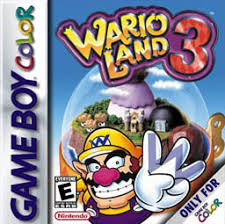
Honestly, outside of Pokemon, I never played a *ton* of Game Boy Color games. My sister and I owned a couple of them between us, but we’d both gotten a GBC (hers) and a GBA (mine) around the same time, so more time was spent on the embarrassment of riches the GBA presented. And thus I was broken forever. But to stick to the actual point of the review, one of the games we all played obsessively was Wario Land 3; I don’t even know who bought it for my sister - probably my mum, but I’m not sure - but we played it obsessively. Even if we, as all children are, were goddamn terrible at video games.
Thus, it’s also one of those games that took me years to get through. It’s been the better part of twenty years at this point, so I can’t even remember what I got stuck on, but I can think of no small amount of times I’d spend hours just wandering around levels with no idea what my next goal was, or just flat-out restarting my save to inevitably get stuck at the exact same spot. In my replay, it wasn’t until the post-game that I started getting stuck, so I’m going to chalk up all those times I got stuck as a kid to being, well, a stupid kid. But I also think it’s a testament to how much I love this game, and it’s overall quality, that as a kid I was willing to do it all over again - it wasn’t like I was hurting for games to play, I just liked Wario Land 3 *that* much. And now, twenty-odd years on? I love it just as much, if not more so - to the point that I’d call it perhaps the best GBC game of all.
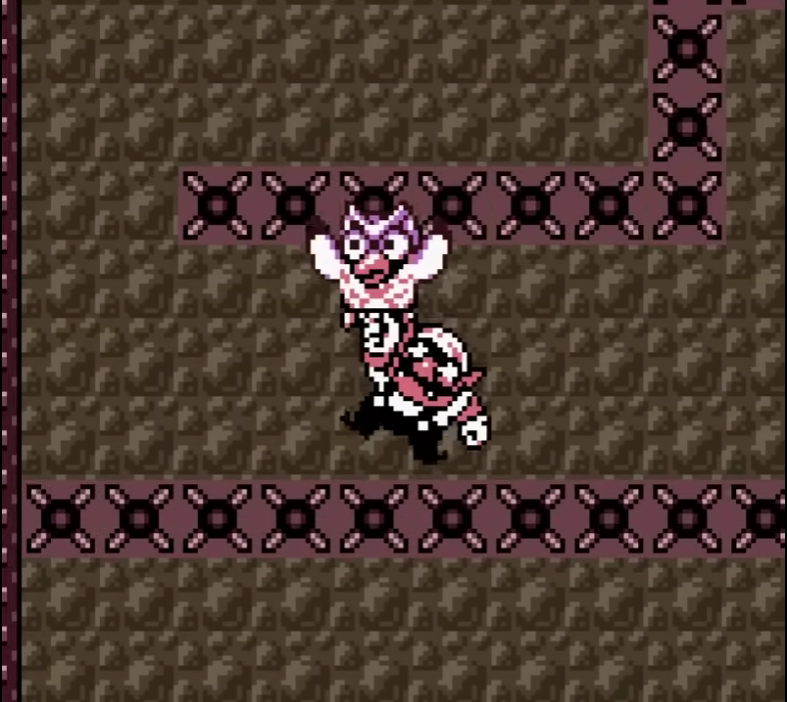
Like all platformers, the storytelling is pretty basic; Wario is off treasure hunting (because that was apparently his main defining feature in his own subseries!?) and discovers a music box - upon grasping it, he is transferred into the little world within. There, he encounters a mysterious figure who asks him to find certain treasures within the world, which will allow him to be freed from the mini-world. Thus, the game’s conceit is clear; Wario must carve his way through twenty-five levels that make up this miniature world, hunting for five musical treasures, but with the caveat he can keep any treasures he finds along the way. That’s pretty much it, sans the ending, but it’s already more storytelling than 99% of other handheld platformers of the day.
Tiny Worlds Within Tiny Worlds
Wario 3’s level structure and general flow is fascinating; rather than taking place through successive levels like a traditional platformer, Wario Land 3 is a slightly more open, less-linear experience than other platformers of its kind. This is because levels aren’t a one and done, traditional experience a ‘la Mario Bros. or to a lesser extent, even the older Wario Land games - each node on the four overworld maps that make up the miniature world Wario has become trapped in represents a single level, and each level will feature four chests within to locate, which in turn have a different coloured key you’ll need to find to open it. Each level is its own little locale, which Wario can freely explore (to the extent of his unlocked abilities) to find each treasure. Each treasure chest colour - silver, red, green, and blue - roughly correspond to the difficulty and order in which you’ll find them. Silver and reds are pretty easy to find even on the hardest levels, but sometimes, finding that damn blue chest can be a nightmare - it’s incredible how much they can pack into these relatively small levels to make them maze-like enough.
But the reason you’ll be constantly going back and forth across the twenty-five levels that make up Wario’s world is that a very decent majority of the treasures will affect either Wario or the levels themselves to facilitate further exploration. One of the early levels opens with a platform a little dude is lurking beneath you can do nothing with, but after a few levels you’ll unlock the ground pound ability - you can now return to that early area, ground pound that platform (and little dude) into dust, and access a new treasure in the underground. Sometimes unlocked treasures will change a key feature of the levels themselves; opening gates, creating new platforms to conduct further exploration, or adding new enemies or creatures that help you progress further into a zone. It’d be a bit much to call the game’s structure complex, but there’s a lot more going on here than any other handheld platformer at the time.
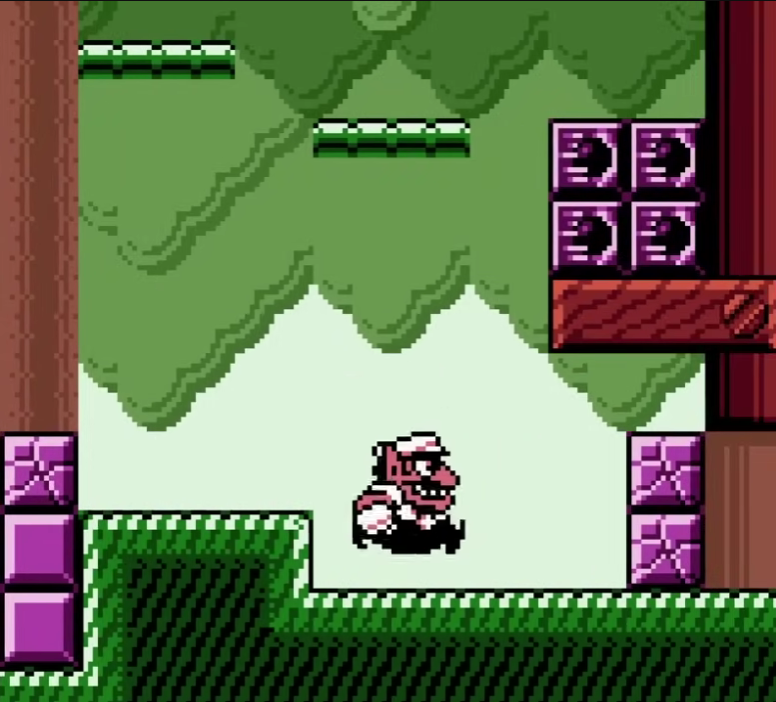
It results in the structure of Wario Land 3 being… I earlier said non-linear, but I don’t think non-linear is quite the word, but it’s not a game of forward momentum; you’ll constantly be revisiting previous stages after unlocking a new move, or finding a treasure that alters some element. Whenever you collect a treasure that affects the overall world, the game will play a little cutscene showcasing the treasure’s effect, and then prompt you on the overworld which specific levels have been changed; not every treasure you unlock will progress the evolution of the world or lead you towards an upgrade, but it’s pretty hard to get lost, as visiting the Temple Wario initially finds himself in will tell you what level you should be tackling next.
Hell, completing the game by collecting the five music boxes isn’t even the full experience, as the game features a hundred treasures to hunt down, and you only need to complete, I dunno… 50-60 to hit the credits? I never really got further than this as a kid, because some of the later treasures can be pretty enigmatic to hunt down, so I was floored to discover there are entire levels I never discovered as a kid, levels that pushed my skills to their relative limit. Seriously, eight-year old Mitch wouldn’t have stood a chance at 100%ing this game. For a platformer from the 90s, the fact that Wario Land 3 took me ten hours - as an adult, with a lot of knowledge regarding the game - to beat is insane, because most platformers were so short it was ridiculous. Seriously, this is one of the best cost-playtime ratios on the GBC.
Flat Wario, Fat Wario, Zombie Wario, Bouncy Wario
Wario controls like a dream. Whilst at first his skillset is fairly basic - jump and a shoulder-tackle attack - there’s a steady stream of moveset upgrades you’ll get as you locate treasure. None of them are particularly revolutionary upgrades; you’ll be able to swim, break stuff with your head, or toss foes to break specific blocks - but it all contributes to making Wario feel more and more natural to control. By the end of the game, he’s a nigh-on wrecking ball of a character that’d be unstoppable even IF enemies could theoretically stop him. The game’s platforming is tight as hell, with movement being very deliberate and having a great utilization of Wario’s entire skillset. It’s not always the focus, as the game frequently bounces between, and occasionally blends, the genres of the puzzler and the platformer, but it’s a bedrock to the game that is thankfully fantastic throughout.
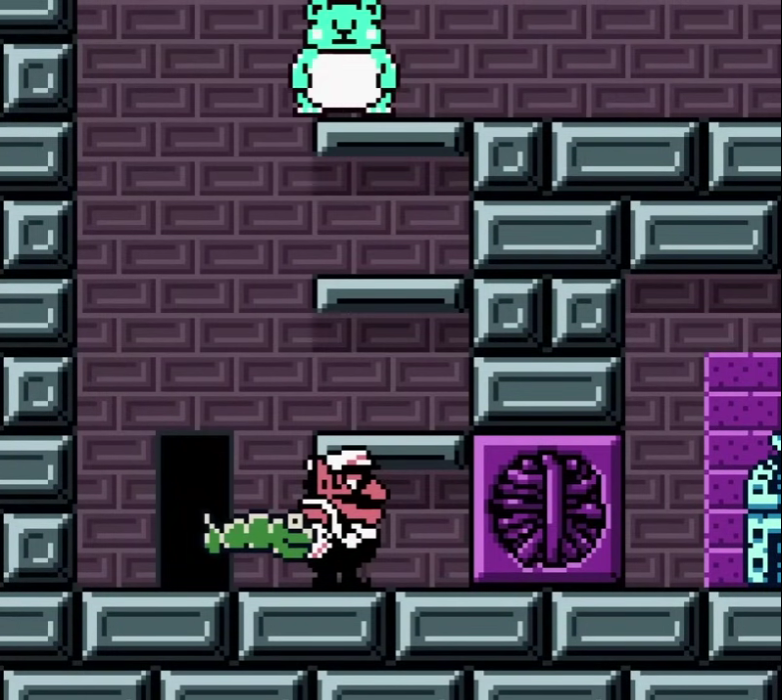
In regards to the variety of foes Wario has to deal with, I can only describe Wario’s encounters with enemies in this game as ‘comedic combat’. Outside of a single example in the game’s final boss encounter, enemies cannot fully take out Wario; he can get stunned, flattened, fattened, zombie-fied, frozen, or rolled into a ball, but he cannot die. Every enemy in this game can simply annoy, not destroy; you’ll be heading down a long hallway, but if you are struck by a snowflake-firing polar bear, you’ll freeze and be auto-slid all the way back down the hallway until you hit a wall. If you’re zombified, you’ll usually be unable to progress forward, as jumping over thin surfaces will cause you to fall, and so you’ll likely need to find a light source to de-zombify. It results in a game that’s a lot less frustrating to struggle or ‘fail’ at, since at the worst, you’ll need to redo a minute-long segment, not entire levels.
More interestingly, you’ll frequently be utilizing the effects enemies inflict upon Wario to further progress in search of treasure. Certain blocks can only be broken by Wario being fattened-up by donut tossers, whilst others will require Wario to be turned into a ball to smash single-block high walls, but forcing you to bounce as the ball to avoid prematurely breaking out of the state. It’s a really cool wrinkle on more traditional platformers, and it really makes Wario feel more like a puzzle game at times. Sometimes it can be a little frustrating to get a certain enemy to be in a position to actually do what you want, but the game is so well designed these are few and far between. But most importantly, they’re just a way that this game is effortlessly funny. The animation work that exaggerates every single emotion and incident Wario finds himself in is simply incredible. Wario is an ugly, ugly man - not as ugly as modern Wario, but still, he isn’t particularly attractive, but the artists have done amazing work in making every time he is stunned, flattened, fattened, zombie-fied, frozen, or rolled into a ball simply hilarious.
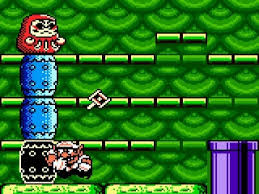
Boss fights are probably one of the only elements of the game that, whilst not awful, aren’t particularly great. Rather than building and improving on the stellar enemy-based puzzle-platforming I mentioned, they invariably feel like ‘dodge the enemy for a bit, hit their weak point one way or another’. While you can’t die, a single hit from any of them will usually send you flying out of the boss arena. They’re just a lot more generic than the rest of the game, which uses Wario’s foes in its puzzle-like ways; the bosses are just like any other game. Okay, okay, I’ll give a pass to the bunny that you play soccer with, that’s at least something different, but everything else? I’m just glad there aren't too many of them to deal with.
There’s also an occasional golf minigame you’ll have to complete to open barricades, and it’s just a really odd addition to the game. It’s just… golf, where you need to kick an enemy into the hole. It’s not particularly hard, but it’s just annoying, and the fact you need to spend money to attempt it is worse. Most annoyingly, you might complete it in one expedition into a level, realise that you’re not hunting for the treasure it’s blocking, and then move on - if you return to that level again later, you’ll need to complete the minigame again. In a game that treats its level like little, somewhat living breathing worlds, the fact you need to repeat it just feels a bit antithetical to the rest of the game. It’s no dealbreaker, but it’s just a big annoyance.
Terrariums
The variety in visual environments you’ll encounter within Wario Land 3’s levels is kind of staggering. Dusty plains, active and dormant volcanos, eerie towers and industrial bridges; the vast majority of levels have some kind of defining feature to separate it from the other twenty-four. Plus, even particular levels will have variance depending on if you’ve entered it during the game’s day or night cycle - yeah, there’s one of those too, and it cycles every time you leave an area. One of the earliest levels features a sleepy little village; during the day, it’s a fairly simplistic, easygoing locale, but if you enter at night, the streets are filled with the living dead, and certain buildings closed during the daylight have been opened.
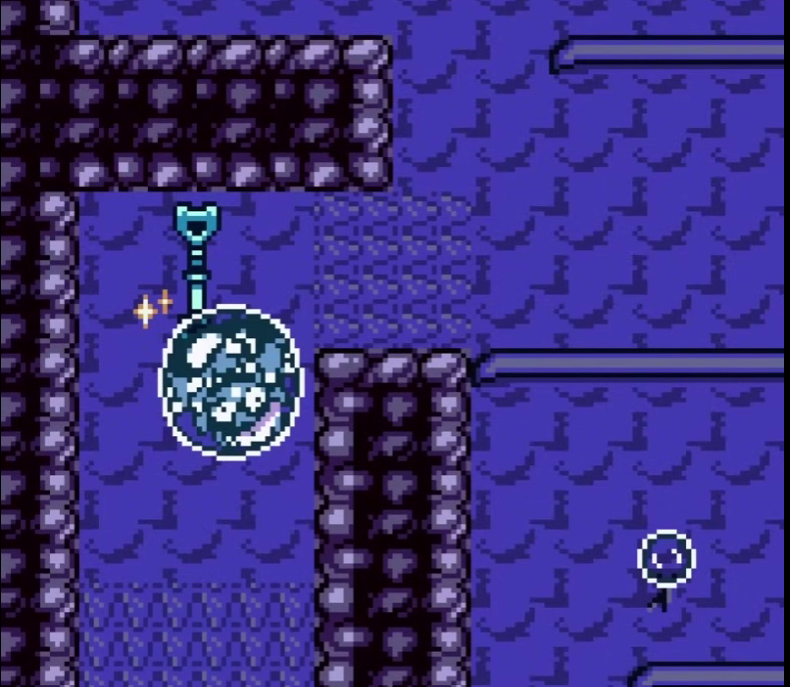
I feel more than any other, the Game Boy Color was incredible in the graphical department - no shade to the original Game Boy, but the fact the monochrome graphics made a LOT of games look really similar. And the GBC, despite being this weird side-grade-upgrade handheld, really knocked out of the part in giving the handheld an amazing variety in looks and feels, and I’d go so far to say that Wario Land 3 is the peak of what the handheld could provide.
Wario Land 3 truly feels like the culmination of what the dev team had been building across the series; whilst Wario Land 4 generally earns a higher level of acclaim, it’s a very different style and experience, and so Wario Land 3 will always be my favourite. There’s just nothing else like it in this era of handheld titles, a pseudo-open experience that polishes this puzzle-platformer to a mirror sheen. Minor issues do little to hold back my enthusiasm for this genuinely incredible game, and that’s before I let nostalgia indoctrinate me further. Seriously, if you have any love for platformers, Wario Land 3 should be at the top of your list - it’s just a shame that hasn’t really been anything like it since.