
Publication Date: 09/04/2026
Dynasty Warriors: Godseekrs
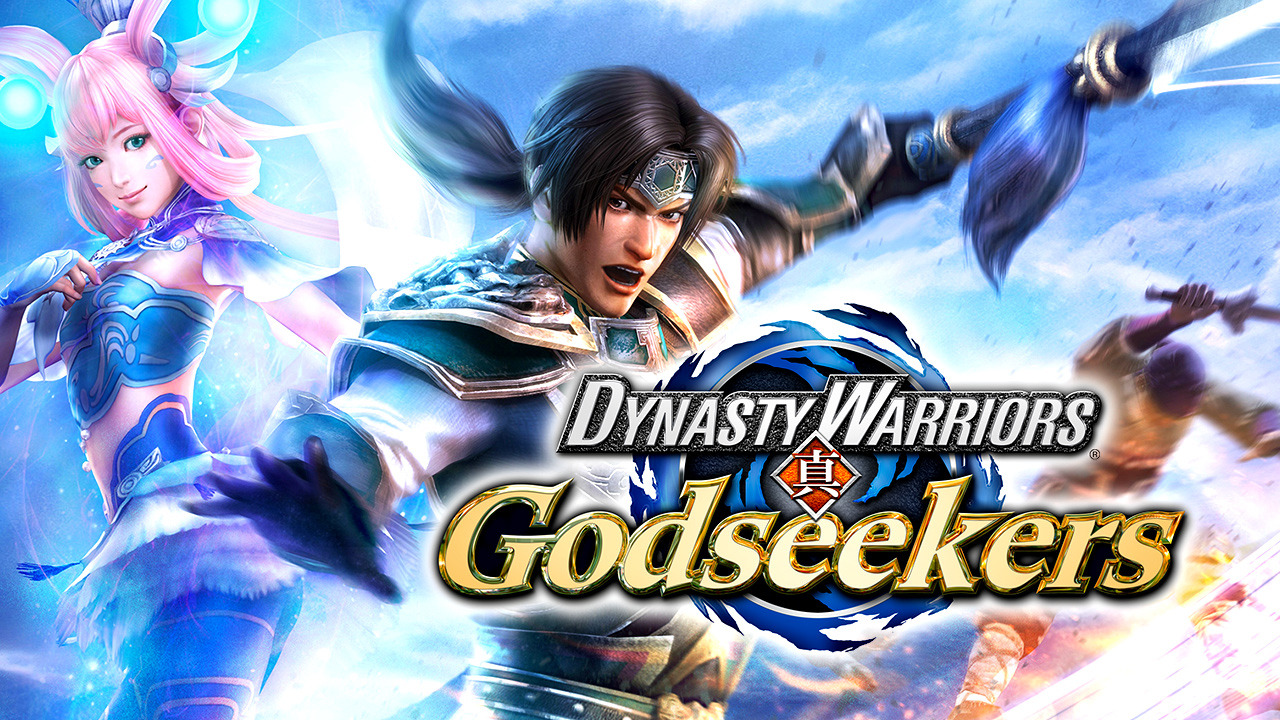
If there’s ever been a poster child for ‘same stuff, different coat of paint’, it’ll always be Dynasty Warriors. Which isn’t to say each game is identical, but the core design has always been nigh-on identical; one man against a thousand, carving through armies like hot butter and feeling *damn* good all the while. And that adherence to sticking with what works generally has been smart, as every time one of Dynasty Warrior’s myriad of spin-offs tried something a little bit different - or the oft-mocked foray into the open-world in Dynasty Warriors 9 - have resulted in flawed projects ranging from simple mediocrity to widely panned disasters (again, hello, Dynasty Warriors 9). Godseekers, thankfully, is not an outright disaster on that level, but for the very first Vita game I’ve ever played - and the, what, tenth? Dynasty Warriors game - Godseekers pales in comparison to its strategic brethren of its genre, leading me to conclude - who is this game for?
Godseekers fails to straddle the line between true strategy and Dynasty Warrior’s decimating roots, creating something that’s too easy, too cumbersome, too boring and just too damn plain to be for anything but the most vanilla of strategy game fans.
Same ‘Ol of the Three Kingdoms
As with just about every Dynasty Warriors game ever, the game’s narrative roughly follows the story of Romance of the Three Kingdoms, which in itself is a dramatized retelling of China’s Three Kingdoms historical period. Whilst you’ll be still engaging with the major events of the saga - heroes uniting to battle Dong Zhuo and Lu Bu, the formation of the kingdoms of Wei, Shu, and Wu, and everything else that has been depicted in Dynasty Warriors nearly ten times over, a few alien elements arrive to remix everything around it. The game’s big twist on the narrative is the appearance of the god-like being, Lixia, who is found being resurrected by series flagship boy Zhao Yun and his childhood friend, Lei Bin. The following story twists the long-spun narrative of the Three Kingdoms depicted a thousand times in the core series with an original tale focussing on Lixia and the search for elemental orbs that hold the key to her past, and to China’s future.
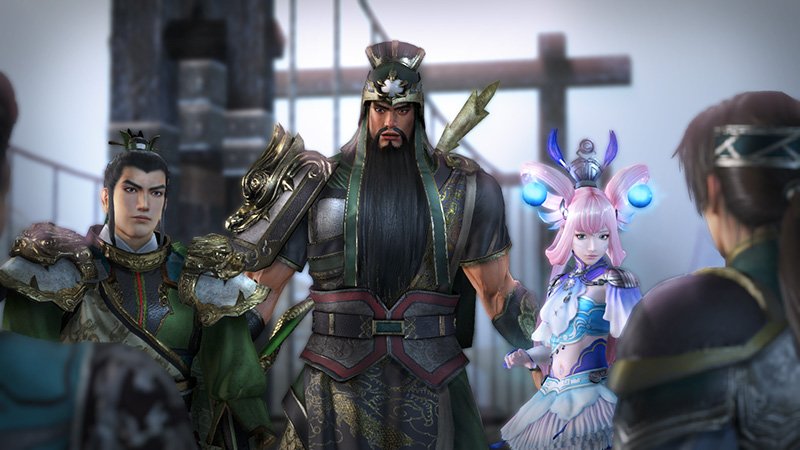
Sadly, the way the presence of Lixia and her elemental orbs and the way they remix the story of the Three Kingdoms are laughably boring at best. These aren’t remotely helped by Lixia herself, who, despite being a literal god, is not a compelling character to center the game around, and Zhao Yun and Lei Bin don’t do much to support her, either. Literally the only reason Lei Bin exists in this game is to spout nerd-ass knowledge to the amnesiac Lixia, and Zhao Yun is only there because he’s the precious golden child who has to be in EVERYTHING to spout all that crap about heroics and stuff. They feel like walking exposition, and it sucks. Sure, a bunch of the other Dynasty Warriors icons turn up and have a turn in the spotlight, but the focus is squarely on our boring trio, and the game suffers as a result.
Can I EVER have a game that’s centered around Wu? Just once?
Unbalanced Tactics
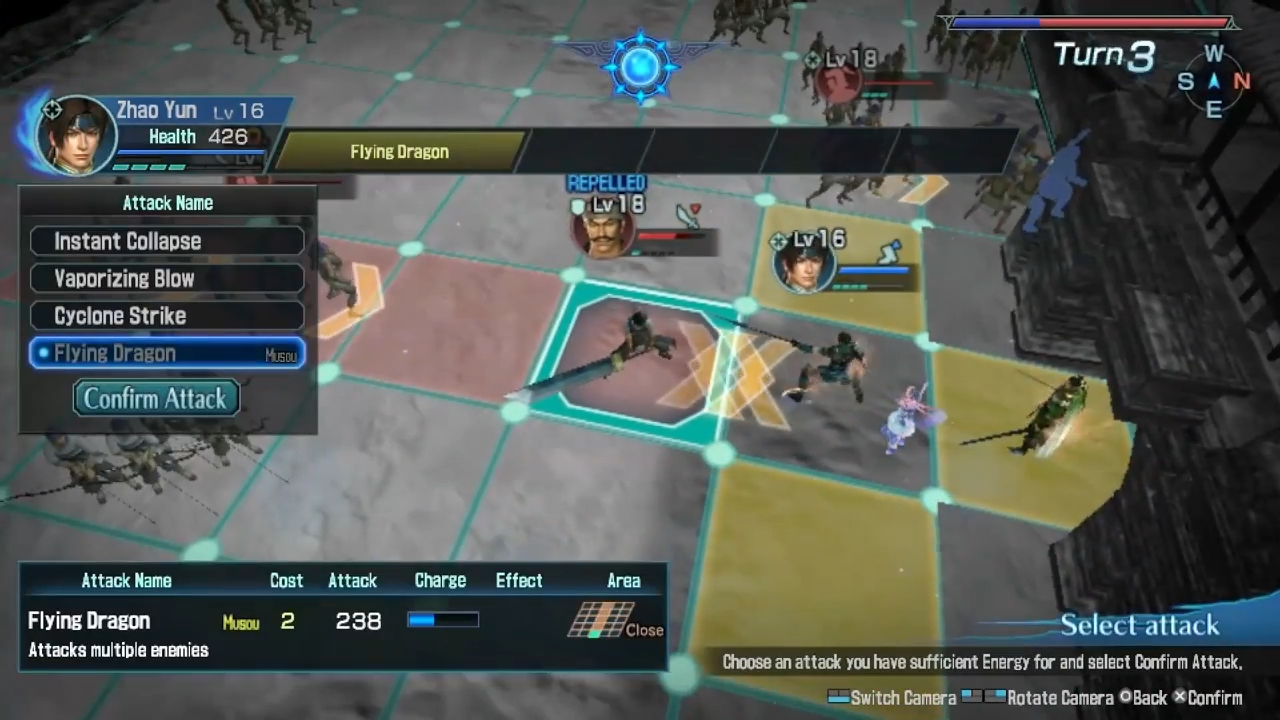
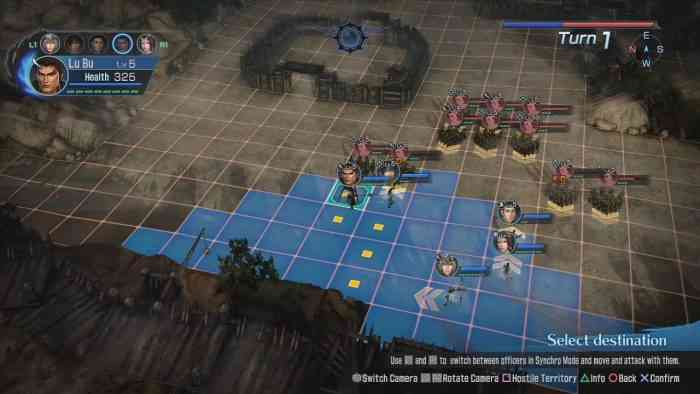
But of course, looking for the narrative to base my opinion around a Dynasty Warriors game of all things is ridiculous. What drew me to Godseekers in the first place was the remixing of one of my favourite franchises into a strategy game - on paper, it sounds great! Godseekers battle stages play out akin to something like Fire Emblem - turn-based, strategic affairs that pit your small squads of units against a much larger, spread out army. Each of your units - of which you have a max of five - has a number of different attacks, each of which have different damage potential, ability point cost (which recover somewhat every turn) and damage range.
Most characters fall into various archetypes with different ranges and attack spread. For example, Zhao Yun specializes in hitting hard in narrow columns, whilst his best friend Lei Bin has weaker, but larger Area-Of-Effect attacks that’ll debuff many foes at once. Most uniquely to the genre, each unit is not limited to a single attack at a time, so you can attack as many times as you have the AP to sustain them, creating opportunities to focus down a particularly problematic target or weaken units for other heroes to dispatch them. In addition, they’ve got their Musou Attacks, a devastating ability that can only be used once their Musou gauge is filled after dealing enough damage.
This single-minded focus of carnage is reflected in map objectives; typically you’ll just need to kill a boss, or reach a certain point on the map to win - hell, if you get particularly lucky, you’ll get a defensive, ‘survive x amount of turns!’. Ironically, I actually found the objectives *less* interesting than the core series; whilst they were rarely required, a big part of making battles go your way in older Dynasty Warriors was completing flank attacks and taking out particular forts and objectives on the way to the main goal - here, it’s usually a one-and-done deal.
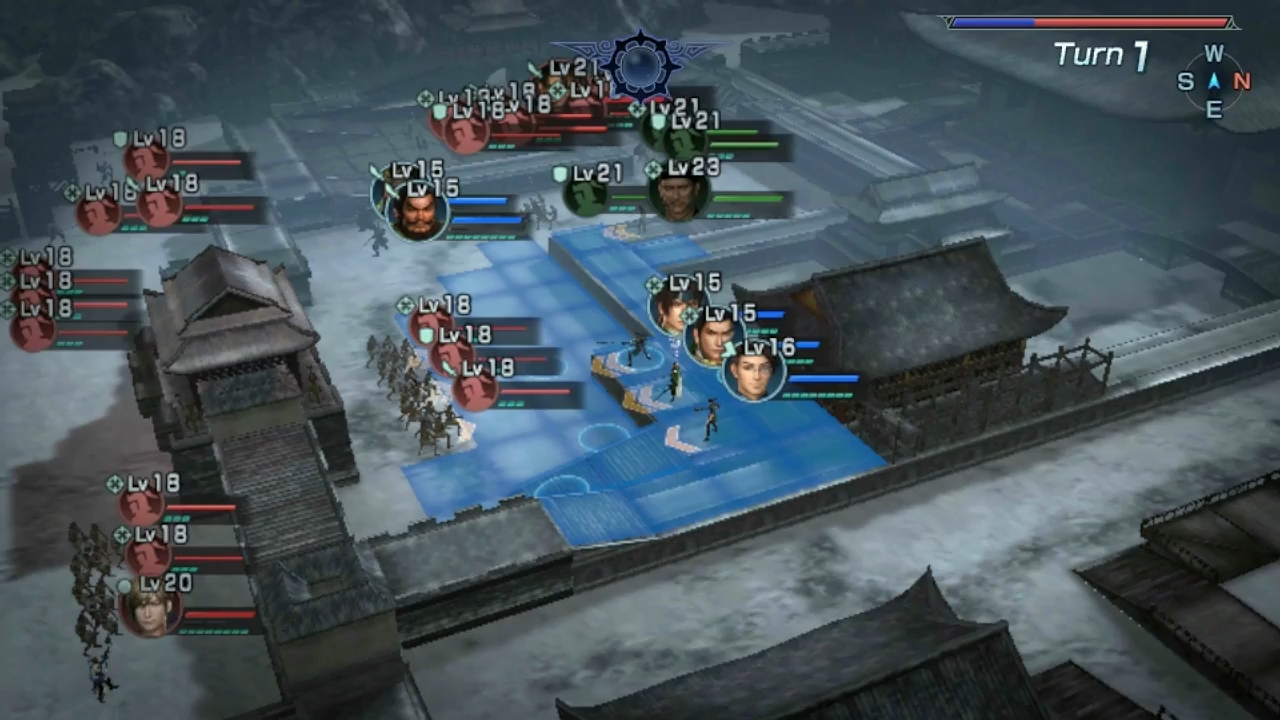
But it doesn’t matter what your objective is, because the gimmick Godseekers bases itself around pounds any level of difficulty in the dust. When combined with the fairly homogeneous visuals of the game, plus the top down perspective muddying the details of each map, it makes pretty much every map in Godseekers feel pretty much the same, just with the occasional different objective or troop combination, no matter the context of what you’re doing. But even if they threw some brutal, unique objective at you, Godseeker’s central gimmick would make them as easy as everything else.
That central gimmick in question is called Synchro Mode. Upon performing attacks, defeating units, and generally just playing levels, you’ll slowly fill the Synchro Meter. Upon filling it up, you can select a character to activate Synchro Mode for them, along with any units placed at certain tiles around them, which will depend on the unit; again, Zhao Yun will active Synchro Mode for characters diagonal to him, whilst Lei Bin will do it to everyone directly vertical and horizontal from him. Synchro-effected characters will instantly regain HP, AP, and get move and attack again if they’ve already moved, which would be a ridiculous boon on its own WITHOUT getting your stats restored on top. Synchro Mode, whilst very cool, is so ridiculously overturned it just further breaks the balance on an already easy game. Even if your already-buffed attacks don’t take down your target, the fact you can just nuke a group of enemies, with an up to 100% damage boost on top of that… the game doesn’t feel designed to cope with it. It feels really good to just devastate the enemy lines - at least at first.
Because it becomes apparent, very quickly, that Godseekers is an almost sleep-inducingly easy game. You’ll have the option to pick Easy, Normal, or Hard for any stage, but you might as well pick Easy for all the difference it’ll make. Even if you’re brand new to strategy games - which may have been the point, to ease the action-oriented fanbase of Dynasty Warriors into the genre - Godseekers on Hard will present you with no friction. Enemies will melt, and for the few who don’t? Well, just fire up Synchro Mode and watch them turn to dust. If that was the decision for the eased challenge, it’s a stupid one because Dynasty Warriors fans have *already* been eased into the strategy genre. Dynasty Warriors is a hack’n’slash first, but every mission was its own little game of time management - completing objectives and protecting allies whilst murdering everything in reach. New fans of the strategy genre might welcome the easier difficulty, but for literally anyone else? A power fantasy is one thing, but this just feels like taking candy from a baby.
A Flawed Transition
Complaining about a Dynasty Warriors title’s lack of difficulty might be kind of weird. After all, this is a franchise that is built on the idea of a power fantasy. Killing thousands with nary a thought, just letting yourself carve your way through the hordes… it’s amazing. But that works because of Dynasty Warrior’s hack-and-slash foundation. Decimating opponents in a turn-based strategy doesn’t feel the same. It’s a genre that rewards the player on quick thinking and deep planning, but none of that is needed for Godseekers - it wants the best of both worlds. But the power fantasy that is foundational to Dynasty Warriors as a franchise corrupts the strategic elements of Godseekers far too much for it to really feel like one. Less turn-based strategy, more turn-based stomping.
But I have to admit, I am biased. Even with those issues, the foundation of Godseekers is serviceable for the average strategy fan. If it was any other franchise, I could look past this, but I love Dynasty Warriors so much. I love its cast and its romanticised telling of our world, but Godseekers does not do the series justice. Godseekers is plain. Really, really plain. It is the total lack of sauce present in the game that gives me little reason to stick with it. And I tried! I really tried, but Goodseekers makes it hard to care, and that starts and ends with how it treats the cast.
To start with, in the core Dynasty Warriors game, whilst you’re doing the same thing for dozens of hours, every character feels unique and fully-formed, with their own little quirks move-set wise and in their personality. Here, it doesn’t matter who you’re controlling, it never really feels like I’m playing as any of the characters I’ve grown to love. In the core games, you’ll be getting nothing *but* characterisation and input from the massive cast. They’re constantly yapping, responding to the various scenarios they find themselves in, but in Godseekers, in-battle dialogue is so sparser and less interesting, it barely feels like that part of Dynasty Warriors made the jump to the strategy genre.
At least the game made some attempts to flesh out the cast; there’s a pseudo-support system, which is used to further unlock other Warriors, missions, and some other bonuses. The meat of it is mostly just shot, one minute conversations between warriors, much like Fire Emblem’s Support System, but the conversations themselves are so boring and ancillary to anything going on it barely feels like anything of value is said - half the appeals seems to be ‘Oh my god, Sun Jian is talking to my blorbo!’, nothing more.
Muddy Progression
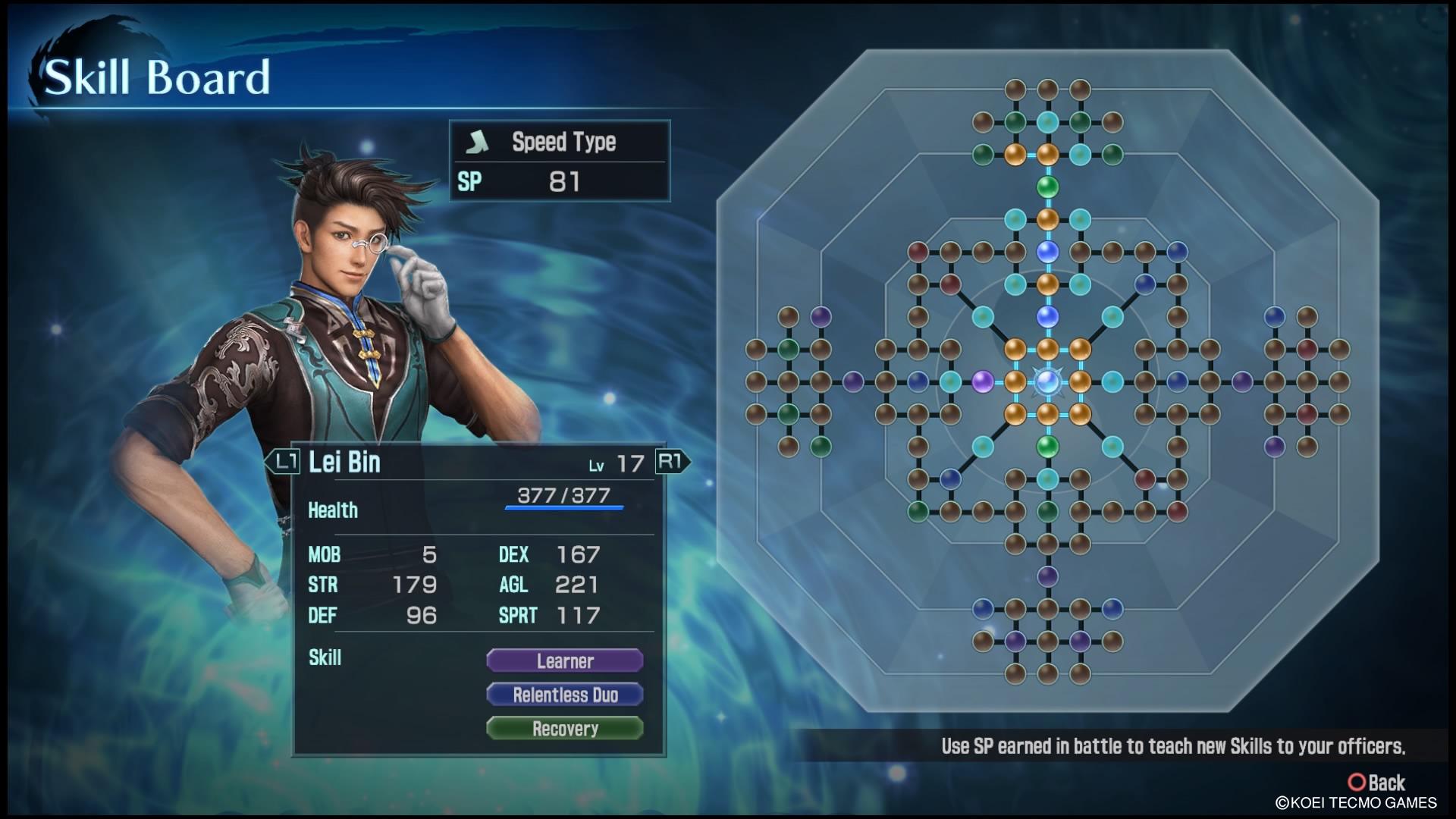
Outside of levelling up, most character progression comes in the game’s wide-ranging skill system and earning new weaponry. Between battles, you’ll be able to dig into the game’s fairly detailed, large-scale skill trees, where each character can unlock various skill nodes with SP earnt in battle to raise stats, learn skills, and generally become more useful in battle. These are truly monstrous in scope, feeling like they have more in common with something like Path of Exile’s skill-tree. Now, whilst I didn’t dig super-deep into Godseekers - around six hours - the skill tree’s size belies its actual usefulness. Endless stat upgrades that just make your numbers go up aren’t engaging to work towards, and with the game being as damn easy as it is, you’d honestly be fine just clicking stats at random and hoping for the best.
But honestly, the biggest issue with the overlarge skill-tree is that actually dealing with it is such a pain, you won’t want to do it for every character you unlock. Whilst not having the full cast of Dynasty Warriors characters that had been released at that point, Godseekers had a pretty robust cast. Not only is the act of unlocking them slow and cumbersome, characters who join get retroactive skill points, so you’ll have to spend even *longer* getting characters up to speed the further you’re into the game. Having to constantly switch out their weapons, their skills, and invest all this time into this overcomplicated Sphere-Grid-wannabe is just more trouble than it’s worth. I just found it easier to just stick with some of the earlier unlocked characters, regardless of my feelings for them, than deal with the fresh-faced recruits I’d earn later on, even if they’re among my most beloved. I’m sorry, I love you dearly, Sun Jian.
Hell, just the act of playing the game feels incredibly sluggish. The game runs off the engine of Dynasty Warriors 8, replicating its art direction and general look when the game zooms in for cutscenes and special attacks. For a Dynasty Warriors game, 8 was a pretty damn good-looking title, but I think trying to replicate that look for the VITA was a massive mistake for its playability. Godseekers targets 30FPS, but it very rarely - if ever - hits that during any of the stages.
If there’s more than a handful of enemy units on screen or you, god forbid, zoom-out, the game’s frame rate craters, which even happened when I’d overclocked my Vita to run stuff a bit better. Aiming for a higher fidelity in graphics didn’t even work - the characters, locations, and animations look ‘just’ fine, all having a seventh-generation console ‘shine’ to them that makes them look either incredibly muddy or incredibly oily, with little in between. It’s not an incredibly ugly game, but the concessions made in performance do not match the results.
I think what hurts most is that I just feel nothing for these games. No matter which Dynasty Warriors it is - mainline, side game, good or bad, I always feel something. Not here. Beyond serviceable gameplay, what does it have? Heavily neutered characters and characterisation, skill systems with no need to exist, and poor performance to boot all wrap up in a game that just feels like it doesn’t really care if you play it or not. The fact that a game like Dynasty Warriors Advance, a game that is much, much worse to play, still sticks out more fondly in my mind is testament to the fact that Godseekers isn’t just mediocre - it’s boring. Forgettable. A nothing game - something which can be much, much worse than just plain old bad.
Hilarious that the very first Vita game I ever played was such a disappointment. Godseekers, at first, feels like a fresh take on Dynasty Warrior’s timeless appeal, but just about everything feels underbaked after a decent first impression. The battles feel decent enough, but the game’s too easy and simplistic to keep my attention. And the fact it runs like molasses just kind of sums everything up. To a person just looking for a decent strategy-RPG on the Vita? I think Godseekers might do something for you, but for the hardcore Dynasty Warriors crowd? Godseekers forgets everything that makes the series special, straying too far from its wheelhouse and creating a game seemingly made for no one in particular.