
Published 1/06/2026
Dragon Ruins

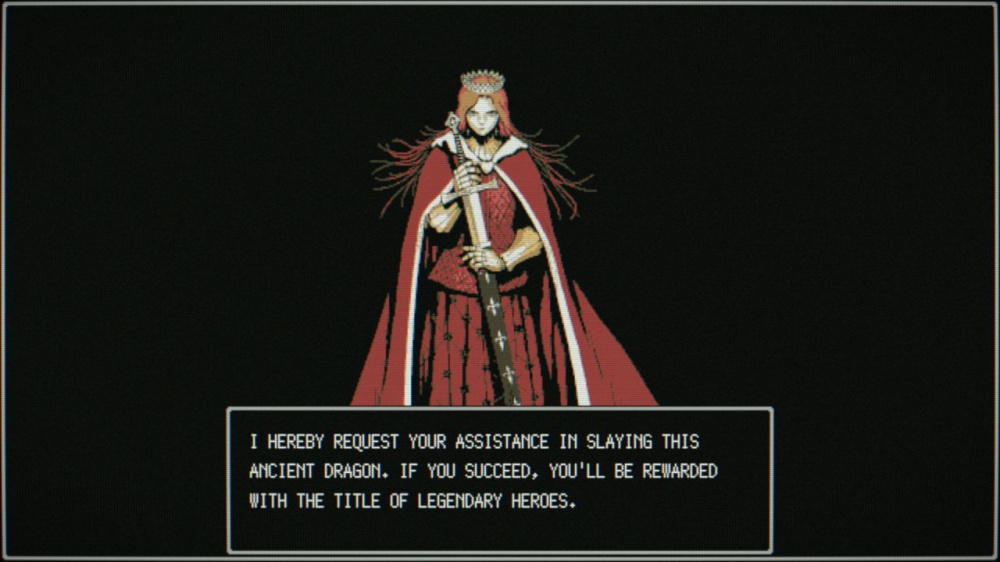
Whilst I think it’s important to research a game before purchasing, watching trailers and whatnot, sometimes you can be pulled in by just a single image. An image that is evocative of everything you want in a genre, in an aesthetic. Only a few games have gotten a purchase out of me, and today I’m taking a look at the most recent: Dragon Ruins. Plus, it only being a couple of bones to actually buy doesn’t hurt too much, either. Dragon Ruins is darkly beautiful, a modern visual depiction of the games that brought the dungeon crawler to the forefront of 80s gaming. But despite its genuine, astounding visual and audio design, Dragon Ruins pares back the gameplay to the barebones, turning one of the most engaging, challenging genres in gaming to little more than an auto-battler wanderer. For some, I’m sure it’s a delight, but for someone like me, who likes a little more meat on the bones? I really struggled to connect with anything here, beyond its aesthetic nature.
Dragon Ruins mission statement is clear - a dungeon crawler for tired people. Yearning to recreate the vibe, atmosphere, and ‘feeling’ of playing Wizardry, Graverobber Foundation strips nearly everything that *was* Wizardry. That is to say… everything, everything. Rather than building out a party of unique, bespoke classes, gathering gear and skills, spells and unique items, Dragon Ruins opts for… none of it. It is a game about simulating the experience of playing Wizardry, with almost none of the input of actually playing Wizardry - and I know it’s not quite fair to Dragon Ruins, but I’m a lot more interested in playing Wizardry than Dragon Ruins. Hell, there isn’t even really any storytelling to be had, other than the initial objective to slay the Dragon lurking within the titular ruins. You won’t encounter other warriors or travellers along your path, just the endless hallways, with their endless foes and endless dead, uh ,ends.
A traditional dungeon crawler - especially one in the style of something as archaic as Wizardry and co. - are simple affairs. In a first person perspective, you’ll form a party of individuals, descending into a foreboding dungeon full of nightmarish creatures, and getting your ass almost instantly handed to you. Each battle will be hard fought, with you making every attack, skill, and even escape attempt matter to the bleeding edge.

Dragon Ruin has almost none of this. Like traditional dungeon crawlers, you’ll play from a first-person perspective, wandering the hall of the titular Dragon Ruins, a single floor dungeon This is where the direct comparisons to Wizardry ends. Instead of entering bespoke menus and screens for encounters with enemies, battles in Dragon Ruins are totally automatic affairs, with nearly nary control to be had. Upon encountering an enemy, your party and their foes will start wailing on each other until someone dies, a battle of sheer stats pitched between two sets of character portraits. No animations, no skills, it’s just watching beautifully drawn characters shake every now and then until death.
The only real element of control you have on these fights is the ability to continue wandering the dungeon as the battles continue; navigating through a door will end the fight. The sole saving grace of the auto-battler system is it can kind of become a game in itself, attempting to navigate to a particular spot on the map whilst keeping your HP levels as high as possible. Still, it feels like I’m barely playing the game at all - due to the need to earn gold and EXP to keep up with stronger and stronger enemies, the near-total gameplay loop of Dragon Ruins is: Walk into a room, 95% of the time you’ll encounter an enemy, you sit there waiting for you to win or lose, rinse and repeat until you defeat the titular dragon. It’s… interesting, on a conceptual level, but it left me wanting more. A lot more.
Character progression is equally as simple. You’ll begin the game by selecting four characters for your party, with the back two being your less-targeted backline, and vice versa. Still, there’s little strategy in deciding which character classes go wear; each classes stats are remarkably similar, so it really comes down to which of the absolutely gorgeous character art you want to be seeing perpetually for the next few hours, maybe with a learning to some of the more armoured fellows for your frontline. As you complete battles, you’ll earn gold and experience for your heroes, and upon maxing out the bar, you can cash out the experience (with a little gold on the side) to level up, or otherwise just upgrade your equipment for cold hard cash. But again, no thought really has to go into this; there are no stats to distribute, or skills to learn. Hell, even upgrading equipment is essentially just a second levelling track for your heroes - you’re not buying bespoke new gear for them, you’re just ‘levelling’ their gear up.
If the rest of Dragon Ruins had a little more substance to it, the progression elements of the game would be more forgivable. Old-school dungeon crawlers are infamously brutal, and punishing if you make single mistake upon levelling up, so avoiding that via just making it all linear levelling isn’t so bad. But when you’re not battling, not gearing up, hell, not even really *playing* the characters, it’s hard to not think of those four little guys hanging out at the bottom of your screen as anything but set dressing. I never felt connected with them, like I was guiding them to victory nor a part of their journey. At the very least, as you level them, and their equipment up, you do feel a genuine sense of progression; enemies a few steps into the dungeon that chunked your heroes down at first become nothing more than fodder to be slapped aside. But, in the end, my party didn’t feel like a party; they’re just four, albeit beautifully rendered, portraits to keep me entertained through endless wireframe corridors.
Because the fact that the game describes the ruins you’re tackling as a ‘maze’ is incredibly apt - it’s just endless corridors of wireframe walls and doors, with nary a thing to distinguish one from the other. It’s a bold aesthetic choice, and one I actually enjoy, but nothing, and I mean *nothing* exists to break up the black and white line-based monotony. It’s nothing more than a maze, populated by the near-randomized, beautifully realised denizens. No NPCs, no points of interests, sans a few magic circles that will warp you back near the entrance to save your hard-earned gold. Thankfully, there is an auto-map you’ll slowly fill out as you wander the endless dungeon, stopping you from dragging out the experience by wandering the same corridors again and again, but filing it out is the sole joy I really felt exploring the dungeon as a whole.
Even rooms containing the most powerful foes the maze holds - ostensibly ‘boss fights’, but they’re exactly the same as any other encounter. Just tankier, longer fights in slightly larger, squarer rooms. Something, anything to mark these fights as apart from the normal encounters would’ve gone a long way in making me feel like I was progressing at all. Even if it was something passive, higher EXP, shortcuts through the maze, a teleport point, ANYTHING - they don’t even drop any extra gold, so there’s no real reason to engage with them beyond accidentally running smack bang into a succubus and probably destroying her.
But obviously, I can’t talk at length about Dragon Ruins without discussing how it looks. Even if I wish there was a bit more variety in how the dungeon looks, it is one hundred percent a vibe throughout on a baseline. But I can’t do anything but heap praise upon the art bestowed upon the characters and creatures that make up Dragon Ruins. Now, from what I gather, Dragon Ruins utilized a pseudo-public repository of character art drawn by Torio, over on Pixiv. Some might say using a somewhat-public art source for your cast of characters and creatures for a game might be taking the easier road, but I can’t imagine feeling that way, especially when Torio’s characters and creatures are so stunningly beautiful.
It feels like an entire diverse world is depicted across the character classes in the sheer variety of races, jobs and armor designs. The creatures are equally as beautiful to behold, and whilst it’s a little sad we only get to see the amount depicted in their little boxes, the fact I can go over to Torio’s Pixiv to see their full rendering is delightful. Regardless of the rest of my thoughts on Dragon Ruins, this game is gorgeous from start to finish, which kind of makes the rest of it being so middling that much worse.

The soundtrack is simple and sparse, with the capital’s evocative, retro and dreamlike theme easing you into the utter weirdness that is Dragon Ruins. The rest of the dungeon itself opts for more the sounds of exploring dungeons - the clatter of feet on stone, the sound of a door being opened, and the back and forth blasts of your heroes struggling against the nigh-unending hordes of the dungeon. I just wish the titular Dragon boss fight at the end of the maze had its own theme - it might’ve helped the finale feel… well, like a finale at all. Because upon it’s defeat, the game begins anew, the endless cycle of the dragon’s death and rebirth continuing forever.
And that’s all Dragon Ruins is - an endless cycle, endlessly repeated.
Dragon Ruins is astounding to look at, a genuinely beautiful remix of one of gaming’s oldest genres. But beyond the stunning facade, it’s core design philosophy just never clicked with me. Stripping away everything from dungeon crawlers into autobattling is interesting, but when nothing else is really supporting the systems - character building, exploration, boss fights, nothing at all - it’s a hard game to really stick with. Its short length does belay some frustration, but I think Dragon Ruins is just incompatible with my tastes. Thankfully, though, the sequel seems to expand on its design philosophy, making something a little more fully formed. As an art project, it’s stunning, but it really just left me wanting to play some true blue dungeon crawlers, with all the depth and depravity that lies within… a fraction of which would make Dragon Ruins something truly special indeed.